Bedding guide
Down Comforters Explained: Warmth, Loft, and Care
A down comforter can feel remarkably warm without weighing heavily on the body. Its secret is not simply the amount of fill, but the fine structure of that fill, the way it is contained, and how well the comforter suits the room and the sleeper. Knowing what those details mean makes it easier to compare comforters—and to care for one once it comes home.
On a cold night, warmth is easy to notice. The physics behind it is quieter. A comforter does not generate heat; it slows the escape of heat your body already produces. The best-known down designs do this with clusters of soft, three-dimensional plumage that hold pockets of still air. That trapped air acts as insulation, while the comforter’s shell and construction help keep the fill in place.
Yet “down” is not a complete description of how a comforter will feel. Fill power, fill weight, chamber design, shell fabric, and room temperature all play a part. A high-loft comforter may feel cloudlike, but loft alone does not tell you whether it will be too warm. A lighter comforter may suit a well-heated bedroom better than a thick one, even if the latter looks more substantial on a bed.
This guide explores how down creates warmth and loft, what construction details matter, and how down compares with silk and other fills. It also explains the care questions worth asking before choosing a comforter, because maintenance is part of the experience—not a footnote to it.
What down is—and what it is not
Down is the soft layer found beneath the tougher outer feathers of waterfowl. Unlike a feather, which has a central shaft and a flatter shape, a down cluster has a rounded, branching form. Its fine filaments spread in several directions, creating a loose structure that can catch air. The quality and size of those clusters influence how much loft a given amount of fill can provide.
Down is often described by bird type, commonly goose or duck. The label can help identify the source, but it does not by itself establish warmth, quality, or comfort. The finished result depends on the fill’s characteristics, the quantity used, the manufacturing process, and the comforter’s construction. A well-made duck-down comforter may suit a sleeper better than a poorly specified goose-down one.
Down also differs from feather fill. Feathers can add structure and weight, but their shafts may be more noticeable through a thin shell. Some products use a blend of down and feathers. In that case, the proportions matter: a higher down content generally means more of the soft clusters associated with lofty insulation, while added feathers may change the feel and weight.
For a clearer comparison, look for a complete materials description. Terms such as “down blend” are less informative when the label does not say what the blend contains. Ask whether the fill is down, feathers, or a mixture, and check any stated proportions. Clear specifications are more useful than a broad claim of luxury.
How loft holds warmth
Loft is the space a comforter’s fill occupies when it is allowed to expand. Down clusters spring outward and create many small air pockets. The comforter’s warmth comes in large part from the still air held among those clusters, not from the down acting as a heat source. When a comforter is compressed, some of those spaces collapse, and its insulating performance can change.
That is why down can feel warm while remaining relatively light. It can form an insulating layer without requiring a dense, heavy mass of material. For sleepers who dislike the feeling of a weighty blanket, this balance is a major part of down’s appeal. But lightness is not a guarantee of comfort: a sleeper who runs warm may still find a high-insulation comforter too hot.
Down comforters are commonly described using fill power and fill weight. These measures answer different questions.
- Fill power indicates the lofting capacity of a given quantity of down under a standardized test. Higher fill power generally means the down can occupy more space per unit of weight.
- Fill weight is the actual amount of fill inside the comforter. It can help indicate how much insulation the product contains, but it needs to be considered alongside fill power, size, and construction.
Neither number should be read in isolation. A high fill-power comforter is not automatically warmer than every lower fill-power option; it may use less fill, be designed for a lighter seasonal weight, or have a different size. Likewise, a larger fill weight does not tell the whole story if the product’s dimensions and fill quality are unknown.
When comparing two comforters, first confirm they are the same size and intended for a similar season. Then compare fill type, fill power, fill weight, construction, and any stated warmth rating. These details form a more useful picture than a single headline number.
Construction: where the warmth is held
The outer shell contains the fill; the internal construction helps distribute it. If the fill shifts away from one area, some parts of the comforter may become thin while others gather into bulky pockets. How the chambers are made can affect both consistency and drape.
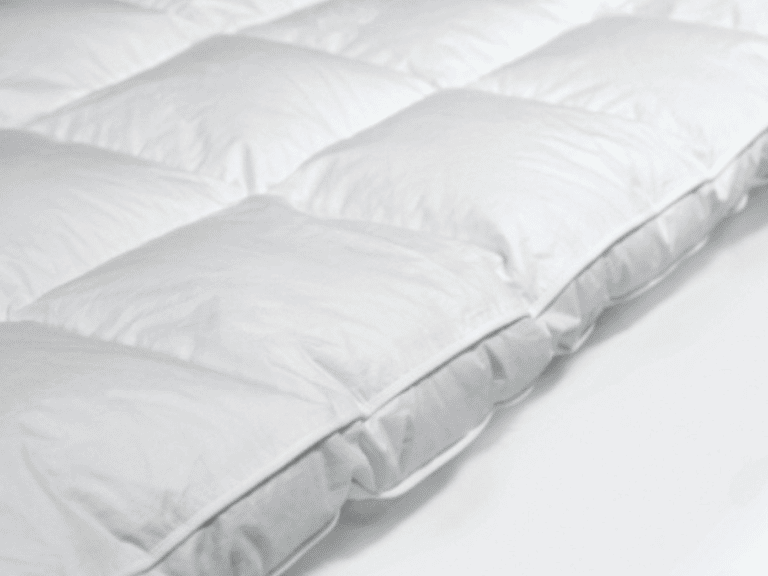
A baffle-box construction uses internal fabric walls between the top and bottom shell layers. These walls create three-dimensional compartments that give the down room to expand. In a well-designed baffle box, fill is less likely to be pressed flat at the seams, helping maintain a more even layer of loft.
Sewn-through construction joins the upper and lower fabric directly at intervals, creating compartments with visible stitched lines. It can be lighter and less bulky, but the joined areas may have less fill than the centers of the boxes. This is sometimes called a cold spot effect. Its significance depends on the design, fill quantity, and how the comforter is used.
Corner loops or ties are another small but practical detail. They can attach the comforter to corresponding points inside a duvet cover, reducing bunching and sideways drift. If you already own a cover, check whether it has matching ties and confirm that the comforter’s dimensions suit the cover and bed.
The shell matters, too. A tightly woven fabric helps contain fine fill, while the weave, fiber, and finish influence breathability and hand feel. Cotton is common, but fabric specifications vary. Thread count alone is not a complete measure of quality: weave, yarn, finishing, and overall construction also contribute.
Choosing warmth for your room and sleeping style
The right comforter begins with the conditions in which it will be used. A bedroom kept cool overnight calls for a different level of insulation from one that remains warm throughout the year. Climate matters, but indoor heating, ventilation, bedding layers, and personal temperature preference can matter just as much.
Think of warmth as a relationship between the comforter, the sleeper, and the room—not a fixed property that feels identical to everyone. Someone who sleeps hot may prefer a lighter fill, a breathable cover, or a comforter designed for summer. Someone who feels cold easily may want more insulation, especially in a bedroom that cools significantly at night.
Useful questions include:
- Does the room stay cool, stable, or warm overnight?
- Do you usually sleep hot, cold, or somewhere in between?
- Will you use a top sheet, duvet cover, blanket, or other layers?
- Are you choosing one comforter for a single season or for most of the year?
- Do you share a bed with someone whose preferred temperature differs from yours?
If warmth preferences differ between partners, separate blankets or a layered arrangement may be more comfortable than asking one comforter to meet two competing needs. A lightweight comforter can serve as a base layer, with an additional blanket available when the room gets colder. This approach also makes seasonal adjustment straightforward.
Do not assume the thickest-looking option is the warmest in the way you want. Loft creates a full appearance, but the most useful information is a clear, comparable warmth description supported by details about fill and construction. Where available, review the maker’s guidance for the intended season and sleeping environment.
Down, silk, and other comforter fills
There is no universally best comforter fill. Each material balances warmth, weight, breathability, upkeep, and tactile feel differently. Comparing those trade-offs is more useful than treating a single fiber as the answer for every bedroom.
Down
Down’s characteristic strengths are loft, warmth for its weight, and a soft, enveloping feel. Its performance varies with the type and quality of fill, the amount used, and the design. Care can require attention: some down comforters are washable, while others need professional cleaning or specific handling. Follow the care label rather than relying on a general rule.
Silk
Silk-filled comforters typically offer a flatter, more draped kind of insulation than the puffier profile many people associate with down. Silk fibers can make a light, breathable layer, and may appeal to sleepers who prefer a smoother, less lofty feel. Construction and silk quality vary, and some silk-filled comforters are not designed for routine washing. Their care labels may advise airing, spot cleaning, or professional laundering instead.
When comparing down vs silk, consider the sensation as well as the performance: do you want a buoyant, cloudlike loft or a lighter layer that lies closer to the body? Also compare how each product is maintained. A comforter that suits your preferred feel but is difficult to care for may not be the most practical choice for your household.
Wool
Wool is often chosen for its ability to absorb and release moisture and for its substantial, steady feel. Wool comforters may feel less lofty than down and can be heavier, depending on their construction. Some are designed to be spot-cleaned or aired rather than machine-washed, so instructions vary by product.
Cotton and synthetic fills
Cotton-filled comforters can feel more substantial and less lofty than down. Polyester and other synthetic fills come in a wide range of weights and constructions. Some are designed for easier washing or lower-cost replacement, though breathability, warmth, durability, and feel differ considerably across products. “Synthetic” is not a single performance category; compare the specifications and care instructions of the particular comforter.
Across all fill types, the shell and the way the filling is held in place affect the result. A comparison that overlooks construction, dimensions, or care can make two very different products seem equivalent simply because both are labeled all-season.
A practical care routine
Care starts with the label. Down comforters do not all share the same cleaning instructions, and the shell, stitching, fill, and finishing can all influence what is safe. Some may be washed at home in a suitably sized machine; others may require specialist cleaning. If the care information is unclear, contact the maker before washing.
A removable duvet cover is a useful first line of protection. It catches much of the everyday dust and body oils that would otherwise reach the comforter, and it is generally simpler to wash than a bulky insert. Using a cover does not eliminate the need to inspect or air the comforter, but it can help reduce how often the insert requires cleaning.
When the care label permits home washing, use a machine large enough for the comforter to move freely. Follow the specified water temperature and detergent guidance; avoid improvised treatments that could affect the fabric or fill. Rinsing thoroughly is important, because detergent left inside a thick item can be difficult to remove.
Drying deserves particular care. Damp fill can clump, and incompletely dried bedding may develop an unpleasant odor. Follow the label’s drying directions and make sure the comforter is fully dry throughout before storing or putting it back on the bed. If a dryer is allowed, periodic checks and gentle redistribution of the fill can help; do not assume the outside is dry while the interior remains damp.
Between washes, air the comforter occasionally in a clean, dry place. Avoid long exposure to harsh sunlight unless the manufacturer specifically recommends it, since light and heat can affect textiles over time. For a small spill, blot rather than rub, and use only a cleaning method compatible with the care instructions. Deep stains, damaged seams, or persistent odors are reasons to seek professional advice.
For storage, make sure the comforter is clean and completely dry. Store it in a breathable fabric bag or other suitable container in a dry, well-ventilated place. Avoid compressing it for long periods where possible: prolonged pressure can reduce loft and make the fill harder to restore.
Questions to ask before buying
Product labels can be brief, but a few focused questions help turn broad claims into useful information. Look for answers about:
- Fill composition: Is the fill down, feathers, a blend, or another material? Are proportions stated?
- Fill specifications: Is fill power provided? Is the fill weight listed for the size you need?
- Construction: Is it baffle-box, sewn-through, or another design? Are corner ties included?
- Intended warmth: Is the comforter described for summer, winter, or year-round use, and what information supports that description?
- Shell and dimensions: What is the shell made from, and will the comforter fit your duvet cover and bed?
- Care: Can it be washed at home, or does it require professional cleaning? How should it be dried and stored?
- Sourcing and standards: Are there clear statements about sourcing, animal-welfare practices, or textile safety? Verify the scope of any certification rather than assuming it covers every concern.
These checks are particularly useful when comparing products at different price points. Cost alone does not reveal how a comforter will perform, and a long list of technical terms is not necessarily a substitute for clear specifications. A reliable description should tell you what is inside, how it is built, how warm it is intended to be, and how to look after it.
Common misconceptions
“Higher fill power always means a warmer comforter.” Not on its own. Fill power describes lofting capacity, while the total fill amount, size, construction, and design purpose also influence warmth.
“A heavier comforter is always warmer.” Weight can offer clues, but different fills and constructions have different insulating properties. Compare products with complete specifications rather than judging by hand weight alone.
“Natural fill needs no special care.” Natural fibers still have maintenance requirements. Down, silk, and wool products may each need different cleaning and storage methods, and the maker’s label takes precedence.
“One comforter can suit every season and every sleeper.” Room conditions and personal preferences vary. A year-round comforter is convenient for some households, but a lighter seasonal option or flexible layers may work better for others.
“A duvet cover makes cleaning irrelevant.” A cover helps protect the insert, but the comforter may still need airing, inspection, or cleaning according to its care instructions.
Finding the right balance
A down comforter’s warmth emerges from a small architecture of fibers and air. The clusters create loft; the chambers distribute it; the shell holds everything together. Each part influences how the bed feels, but none can be judged apart from the conditions of the room and the habits of the sleeper.
Start with the experience you want: light and lofty, close and draped, or substantial and steady. Then match that preference to your room temperature, bedding layers, and tolerance for maintenance. Compare fill composition, fill power, fill weight, construction, and care instructions in a consistent way. When a label leaves key questions unanswered, treat that as useful information in itself.
The right comforter is not necessarily the warmest or the most expensive. It is the one that provides suitable insulation without making the bed uncomfortable, fits the cover and sleeping arrangement, and can be cared for in a way that works for your home. With those details understood, loft becomes more than a lofty promise: it becomes a practical measure of comfort, chosen with the season and the sleeper in mind.