Bedding Guide
Gingerlily Seasonal Bedding: Choosing a Summer or Winter Weight
A bed that feels just right in July may feel insufficient in January. Choosing a seasonal comforter weight can help you adapt to changing room temperatures, personal warmth preferences, and the way you sleep—without asking one heavy layer to work all year.
Sleep takes place in a small, changing climate. The room cools after sunset, warmth gathers beneath the covers, and the sleeper’s own temperature shifts through the night. Bedding sits at the boundary between those influences. Its job is not simply to trap heat, but to provide enough insulation while allowing excess warmth and moisture to move away from the body.
That balance is why seasonal bedding weights matter. A lightweight silk-filled comforter may suit a warm bedroom or a sleeper who often feels overheated. A winter-weight option can add insulation when the room gets cold. Between them lies a practical question: should you choose one adaptable comforter, or keep separate weights for different seasons?
Gingerlily’s seasonal silk-filled options provide a useful example of how to think through the choice. The key is to look beyond the words “summer” and “winter.” Room temperature, the warmth of other bedding layers, and your personal comfort are better guides than the calendar alone.
What a bedding “weight” means
In bedding, weight can refer to the amount of filling in a comforter, the warmth it provides, or a warmth rating such as tog. These measures are related but not interchangeable. A comforter’s performance depends on its construction as well as its fill: the type and distribution of fibers, the shell fabric, the loft, and the way air moves through the finished piece all influence how warm it feels.
A lighter comforter generally offers less insulation. It can still feel pleasantly warm, but is less likely to hold as much heat around the sleeper. A heavier or higher-rated comforter typically provides more insulation for colder conditions. More weight does not automatically mean better comfort, however. If a comforter holds more warmth than you need, you may wake feeling too hot or find yourself pushing it away.
Gingerlily seasonal silk-filled comforters are described as using mulberry silk filling in a cotton sateen shell. The summer-weight model is listed at 2–4 tog, while the winter-season model is listed at 9–11 tog. Those figures offer a starting point for comparison, not a promise that every sleeper will experience the same warmth. Individual results depend on the bedroom and the rest of the sleep setup.
For an overview of the lighter option, see the Gingerlily summer-season-weight silk-filled comforter. The winter-season-weight silk-filled comforter is designed for colder conditions and lists a 9–11 tog profile. Check product details and care guidance before choosing, since specifications and recommendations can vary.
Why silk can suit a changing sleep climate
Mulberry silk begins as a natural protein fiber produced by silkworms. In bedding, its fine, continuous fibers can be layered into a light filling, while a woven outer shell contains and protects that fill. The result is not the same as a loose, fluffy pile of fiber: construction helps determine how evenly the comforter lies and how it drapes across the bed.
Silk is often valued in bedding for its light hand and its ability to absorb and release moisture. These traits can contribute to a comfortable sleep environment, especially for people who dislike the heavy, enclosed sensation of some thick covers. But no fiber can guarantee that a person will stay cool or prevent night sweats. Room conditions, health, sleepwear, mattress materials, and personal temperature sensitivity all play a part.
A silk-filled comforter can be one element in a broader approach to temperature regulation. A breathable sheet, suitable sleepwear, and an appropriately ventilated room may matter as much as the comforter itself. If the bedroom stays warm overnight, switching to a lighter cover may help more than adding a different fabric beneath an overly warm top layer.
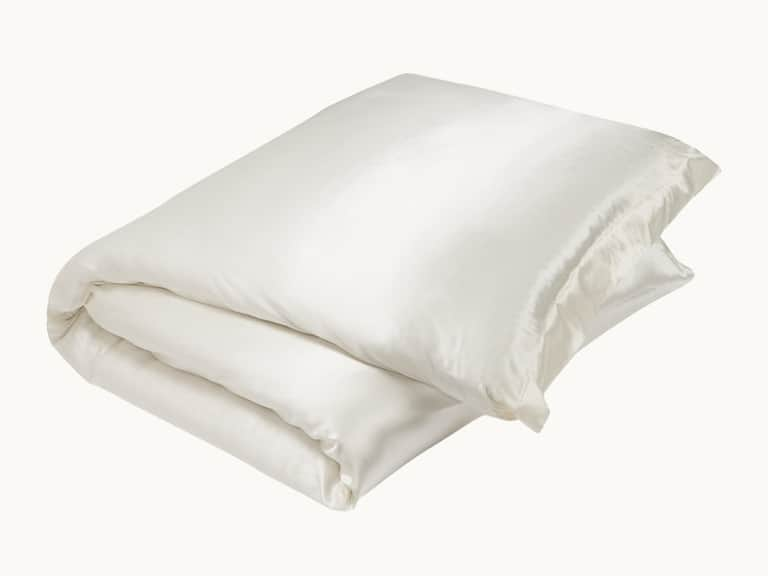
It is also helpful to separate the function of a comforter from that of a duvet cover. A comforter provides the insulating layer; a cover protects it and affects the surface feel. For example, the Ivory Silk Duvet Cover is a 100% mulberry silk cover, not a seasonal comforter. A cover can change how the bed feels against the skin and can protect an insert, but it does not replace choosing an appropriate fill weight.
When a summer-weight comforter makes sense
A summer weight may be a good fit when the bedroom remains warm, when a sleeper tends to overheat, or when a thicker comforter feels confining. It can also suit people who prefer a light layer even in cooler weather and use other blankets only when needed. The Gingerlily summer option is described as a lightweight silk-filled comforter with a 2–4 tog equivalent and a cotton sateen shell.
In a warm room, the goal is often to have enough coverage to feel settled without trapping unnecessary heat. A light comforter can provide that familiar covered feeling while leaving more room for airflow than a winter-weight layer. If the weather becomes especially hot, even a summer comforter may feel too warm; a sheet or very light blanket may be more comfortable on those nights.
Consider a lighter weight if you recognise several of these patterns:
- You regularly wake warm or uncover yourself during the night.
- Your bedroom stays warm after sunset, even when outdoor temperatures fall.
- You prefer a light, flexible layer rather than a substantial cover.
- You already use warm sleepwear, a mattress protector, or other layers that add insulation.
- You want a comforter that can be paired with a separate blanket only when conditions call for more warmth.
These are clues, not strict rules. Someone who sleeps cool may find a summer weight too light even in a warm season, while an overheated sleeper may use one for much of the year. When uncertain, think about your typical bedroom at bedtime and again in the early morning. The room’s overnight low can be more revealing than the afternoon forecast.
When to consider a winter weight
A winter-weight comforter is intended to provide more insulation when the bedroom is cold or when the sleeper consistently feels chilly beneath lighter bedding. Gingerlily’s winter-season-weight silk-filled comforter is listed at 9–11 tog and has a cotton sateen shell. Product details also describe side and corner ties and buttons for securing or combining compatible weights; verify the specific product instructions before layering pieces together.
More insulation can be welcome in a drafty room, in a home where heating is reduced overnight, or for someone who tends to feel cold while resting. A winter weight may also simplify the bed: instead of stacking several blankets, one more substantial layer can provide the warmth needed. The trade-off is that a high-insulation option may be uncomfortable when the room warms or when the sleeper’s temperature changes.
Before choosing a winter weight, assess the conditions around the bed. A cold exterior wall, a window that lets in a draft, or a bedroom that loses heat quickly can make a comforter feel more necessary. On the other hand, a well-heated room and warm sleepwear may reduce the need for a heavier fill. The most useful question is not “Is it winter?” but “How warm do I need the bed to be where I actually sleep?”
A winter comforter may be worth considering if lighter bedding leaves you cold, if you often add multiple blankets, or if your bedroom becomes notably cool overnight. If you share a bed, also consider whether both sleepers want the same amount of warmth. One person’s ideal winter weight can be another person’s overheating problem.
One weight or two? Building a year-round setup
There is no single answer for every home. A sleeper in a mild climate with a stable indoor temperature may do well with one all-season comforter. Someone who experiences pronounced seasonal changes—or who prefers different levels of warmth—may find separate summer and winter weights more comfortable.
A single all-season option keeps the bedding routine simple. It can be a sensible choice when the room rarely becomes very hot or very cold, when the sleeper’s preference is consistent, or when storage space is limited. Gingerlily also offers an all-seasons-weight silk-filled comforter, described as a year-round option with mulberry silk filling and a cotton sateen shell. Its suitability will depend on the sleeper and room; “all season” is a design intention, not a guarantee of ideal warmth in every climate.
Separate weights create more control. A summer comforter can be used during warm months, with a winter weight brought out as temperatures drop. This approach can also help in homes where heating schedules change or where bedrooms vary in temperature. The practical costs are additional storage and the need to care for more than one piece of bedding.
Another approach is layering. A lighter comforter can serve as a base, with a blanket added during cold spells. Some products are designed to connect with another compatible weight using ties or buttons, which can make seasonal adjustment more straightforward. Always confirm that the pieces are intended to be layered together; two unrelated comforters may shift, bunch, or create uneven warmth.
When deciding, weigh the benefits of flexibility against the appeal of simplicity. If you change layers often, want to fine-tune warmth, or share the bed with someone who has different needs, a modular setup may be useful. If you prefer a bed that is easy to make and maintain, one carefully chosen weight may be the better fit.
A practical way to choose
Start with your sleep environment rather than the product label. For several nights, notice whether you wake too warm, too cold, or comfortable. Pay attention to the room temperature at night, not only when you go to bed. A room that feels mild at 10 p.m. can be much cooler by dawn, and that change may explain why a comforter feels right at first but insufficient later.
- Track your comfort. Note whether you kick off the covers, add layers, or wake chilly. A simple pattern over several nights is more useful than one unusual night.
- Consider the whole bed. Sheets, mattress protectors, sleepwear, blankets, and the mattress itself all affect warmth and airflow.
- Account for your room. Think about heating, drafts, insulation, and how quickly the bedroom temperature changes overnight.
- Choose the direction of adjustment. If you often overheat, look first at lighter bedding. If you remain cold despite reasonable room warmth, more insulation may be appropriate.
- Check the construction and care. Confirm the fill, shell, closures, dimensions, and cleaning instructions for the specific comforter.
If you sleep with a partner, discuss the problem each of you is trying to solve. Separate blankets can sometimes accommodate different warmth preferences better than one shared, very heavy comforter. Where a compatible system allows two weights to be joined, it may offer another route to individual adjustment.
Care and storage affect seasonal performance
Seasonal bedding often spends part of the year stored away, so handling matters. Follow the care label for the particular comforter: silk-filled products can have specific restrictions, and the care instructions for a silk shell or cover should not be assumed to apply to the filled insert. Some silk-filled comforters are intended to be aired and spot-cleaned rather than washed or dry-cleaned. When product guidance is specific, use it as the authority.
A duvet cover can reduce direct contact with body oils and everyday soil, helping protect an insert between deeper care intervals. The cover itself must still be cleaned according to its own instructions. Silk covers commonly call for a delicate wash, mild detergent, and careful drying, but the label should always take precedence.
Before putting a comforter away, make sure it is completely dry and clean according to the maker’s guidance. Store it in a dry, breathable space rather than compressing it tightly for a long period. At the start of a new season, air it out as directed and check that ties, buttons, seams, and the shell remain in good condition. These small routines help keep seasonal changes practical rather than turning each switch into a repair or cleaning task.
Common misunderstandings about seasonal weights
“A heavier comforter is always warmer and better.” More insulation can be helpful in a cold room, but it may be uncomfortable for someone who sleeps hot. The right weight is the one that suits the conditions and the sleeper.
“Silk means you will never overheat.” Silk’s breathability and moisture-handling qualities can contribute to comfort, but temperature regulation is not a guarantee against overheating. Room conditions and personal physiology remain important.
“Summer weight is only for summer.” A light comforter can suit a warm bedroom at any time of year. Conversely, a person who sleeps cold may need more warmth even in a season commonly described as warm.
“The cover determines the comforter’s warmth.” A duvet cover affects the surface feel and can protect an insert, but the fill and construction are central to the comforter’s insulating function.
“One tog rating tells the whole story.” A rating helps compare warmth, but it cannot capture every factor that shapes how a particular bed feels. Use it alongside room conditions, construction details, and your own experience.
Finding the right seasonal balance
Choosing between a summer and winter weight is an exercise in observation. The bedroom has its own climate, and every sleeper responds differently to warmth, airflow, and the feeling of weight on the body. A lightweight comforter may be enough in a warm room or for someone who tends to overheat. A winter weight may offer welcome insulation when the room cools and lighter layers no longer feel sufficient.
For Gingerlily’s options, the listed 2–4 tog summer weight and 9–11 tog winter weight provide a clear contrast. An all-seasons design or a compatible layered setup may suit people who want fewer seasonal changes or more control. Compare the product specifications, consider your overnight room temperature, and choose the arrangement that lets you remain comfortably covered without excess heat.
Seasonal bedding works best when it follows the sleeper rather than the calendar. A thoughtful switch—lighter layers as the room warms, more insulation when it cools—can make the bed feel steadier through the year, while preserving the simple comfort of a familiar place to rest.